Switch It Up! How Rotating Fly Sprays Fights Resistance and Protects Horses
It’s nothing personal. It’s all about survival.
Biting flies--including stable, horn, deer and horse flies—dine on blood. They will feed on your horse, the neighbor’s 4-H steer, your dog—or you. They’re just after a blood meal.
It takes only a few minutes for an undisturbed fly to consume its fill. Then it will buzz off to rest until it’s time to eat again.
As a horse owner, your mission is to interrupt that feeding cycle and protect your horse from insect pests that can be annoying and even transmit disease.
Back in the day, we found a fly spray that worked and just kept using it—year after year. But the old routine of finding a favorite product and using just that one is outdated.
Fly spray manufacturers didn’t make this happen. Flies did it by adapting to survive.
Resistance develops
When flies are exposed to a product you’ve sprayed on your horse or around your barn, the susceptible flies die. The ones that survive are the flies that are resistant to the active ingredients in that product. When those remaining flies breed, they produce more resistant flies, and the cycle of resistance continues.
You’ve probably experienced having a long-time favorite fly spray that doesn’t work like it did previously. That’s because when insects develop resistance to an active ingredient, the product is no longer as effective.
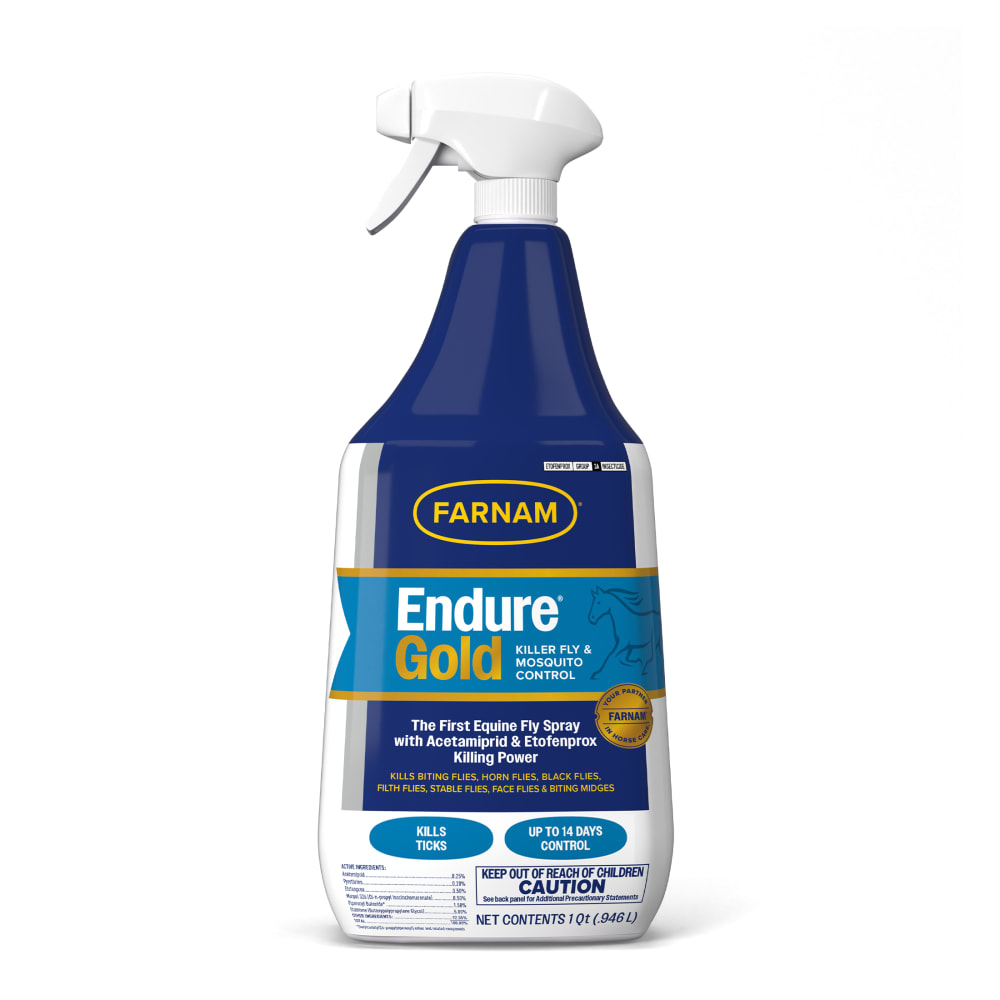
To combat the challenge of resistance, Farnam created Endure® Gold Killer Fly & Mosquito Control (Endure® Gold), a next-generation insecticide/repellent fly spray with a synergistic combination of novel ingredients.
Two of the active ingredients--acetamiprid and etofenprox--set Endure® Gold apart from other products, because it’s the only equine fly spray formulated with these ingredients.
“Acetamiprid and etofenprox have not been used in combination on horses before. This is the first EPA-approved fly spray for horses using those ingredients,” notes Chris Holderman, Ph.D., entomologist and senior manager of product development at Farnam's Research and Development facility in Dallas.
Why does that matter?
“When we started developing this formula, every product was pyrethroid based. We know there is resistance to these ingredients when they are the only ones used,” says Holderman.
The Farnam team wanted to develop a product that could be used rotationally to combat resistance. Rotation means changing the mode of action by using different ingredients and in different combinations.
Mode of action
Flies don’t care about product design or label or manufacturer. It’s the active ingredients that matter to flies and other insect pests.
Equine fly sprays can be repellent and/or insecticidal. Repellent products are designed to just repel flies and pests, so they don’t bother the horse, while insecticides are specifically meant to kill insects that come in contact with the spray.
In the scientific world, how ingredients work is known as “mode of action.”
For example, some ingredients repel flies and discourage them from even landing on the horse. Other ingredients are activated when flies land on the treated horse, causing the insects to be immediately repelled and fly away, or killing them if they land and absorb the ingredient.
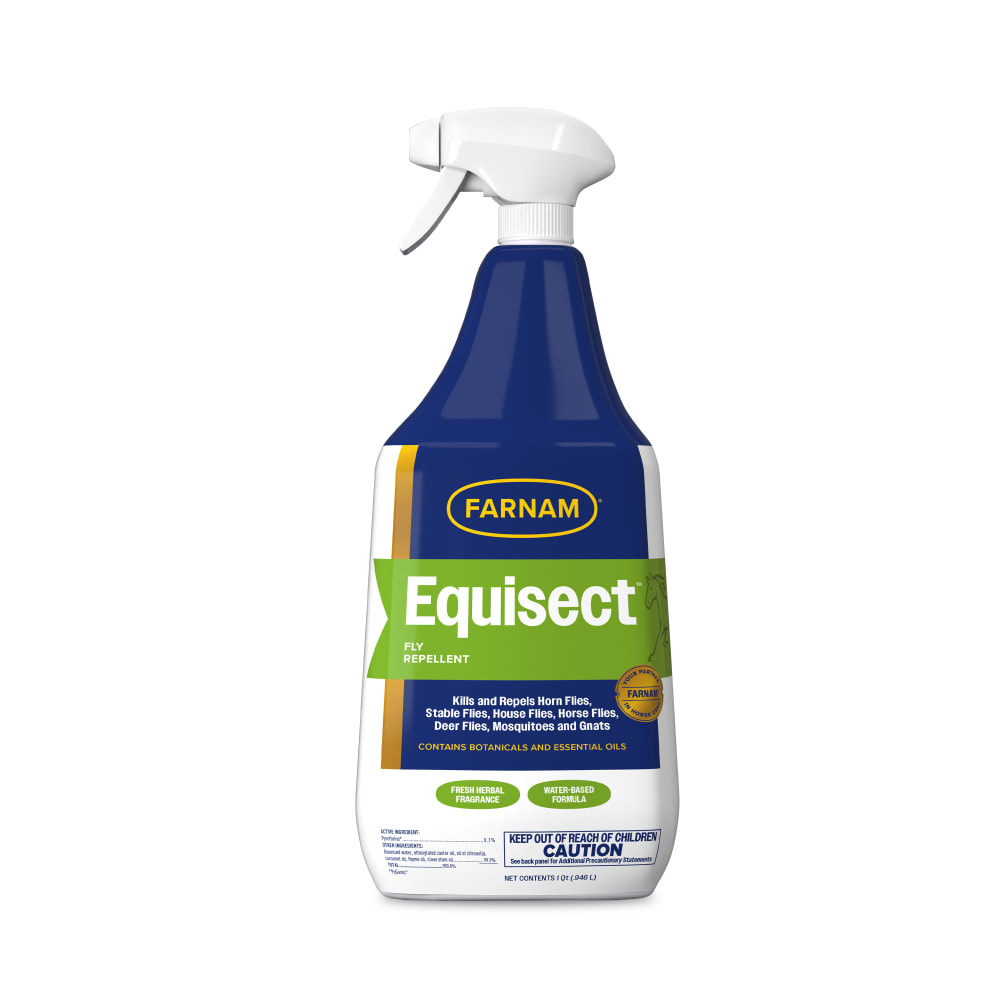
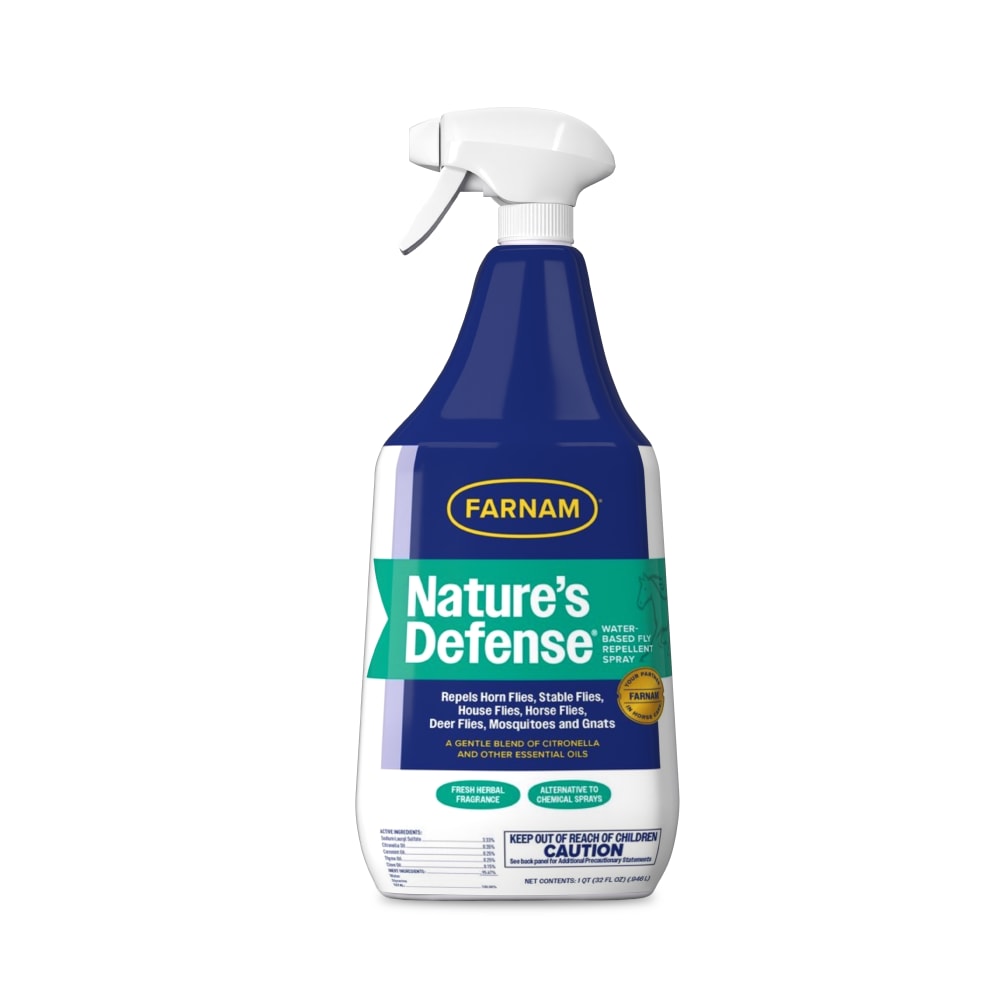
Holderman explains that botanical sprays like Equisect™ Fly Repellent and Nature's Defense® Water-based Fly Repellent Spray contain citronella and other essential oils that actually help “mask” the horse’s presence and then act as an irritant if flies get close.
Endure® Gold is both repellent and insecticidal thanks to the combination of active ingredients that both repel AND kill pests.
Acetamiprid and etofenprox work when flies land on the sprayed horse and absorb the chemicals through their feet. Although these active ingredients work on different target sites, they both affect insect nervous systems and cause insect death.
Until recently, almost every horse fly spray on the market had pyrethroids as the active ingredient(s), so they all have a similar mode of action, and act on the insect nervous system.
Rotate between products
When you switch it up and rotate between horse fly sprays, instead of just using your favorite all year, you make it harder for insects to develop resistance to one active ingredient.
“Putting different products in your rotation scheme reduces the likelihood of insects being pushed into a resistance population,” explains Holderman. “In a perfect world you could switch between using five or 10 active ingredients, but that doesn’t exist because we are limited on the modes of action available.”
For the most effective protection, you should rotate products several times throughout fly season.
“It helps all the products work better when you’re not relying on just one mode of action or one active ingredient,” says Holderman, who recommends rotating between repellent and insecticidal products that have different modes of action.
Keep in mind, it’s not just changing brands or products. It’s about the active ingredients and how they work.
“If you’re swapping one pyrethroid product for another pyrethroid product, it may not get you a different mode of action that you need, even though you’re using two different products,” says Holderman.
Check the label
It all makes sense when you start reading labels to identify the active ingredients.
Repellents and insecticides fall into different classifications, or “groups,” based on their active ingredients. The EPA requires some product labels to include a mode of action box, depending on the ingredients, but this is information is not required on all labels.
If every fly spray included this on their label, rotation would be simple. For example, if you’d been using a product made with “group 3” ingredients, you could just rotate to a product with active ingredients from another group to ensure a different mode of action.
Acetamiprid, one of the active ingredients in Endure® Gold, is in “group 4,” so you immediately know it has a different mode of action from “group 3” ingredients.
Here’s a tip: If the active ingredient ends in “rin” that tells you it’s a pyrethroid and falls into “group 3.” (Examples are permethrin, cypermethrin, cyfluthrin, prallethrin, etc.)
Unlike chemical ingredients, botanical-based horse fly sprays aren’t required to be registered with the EPA. These products typically use essential oils, such as citronella, cornmint, thyme, clove, etc. Botanical ingredients can vary by product and are typically considered insect repellents, not insecticides.
Build your team
When creating a fly control program, also known as an Integrated Pest Management (IPM) plan, it should be specifically targeted to your horse and your area. Take into consideration:
- Horse’s environment (stabled, turned out, both)
- Pests of concern in your area
- Product preferences (chemical or botanical ingredients or both)
- How often you will apply products (depends on how horse is kept, how often you bathe horse, etc.)
The IPM plan that works best for the Colorado show horse kept in a barn when not being exercised, won’t be the same as the fly control plan for the horse turned out on pasture 24/7 in Florida. The good news is that you can customize the plan for your horse and tweak it throughout fly season as needed.
“It’s not impossible to have one fly spray work well all season, but it is unlikely,” says Holderman. “The products you choose to rotate between will vary depending on how often you bathe the horse and the pests you’re fighting.”
Check labels to make sure the products you use are effective against the pests of greatest concern.
“Most products are pyrethrin-based, so you could use one of those first, then rotate to Endure Gold for the worst part of fly season, then back to a pyrethrin-based product so you’re changing modes of action,” advises Holderman.
Or start the season with a botanical product like Equisect™ Fly Repellent or Nature's Defense® Water-based Fly Repellent Spray. Then use Endure® Gold when flies are at their worst and rotate to a spray like Repel-X or Tri-Tec 14 later in the season.
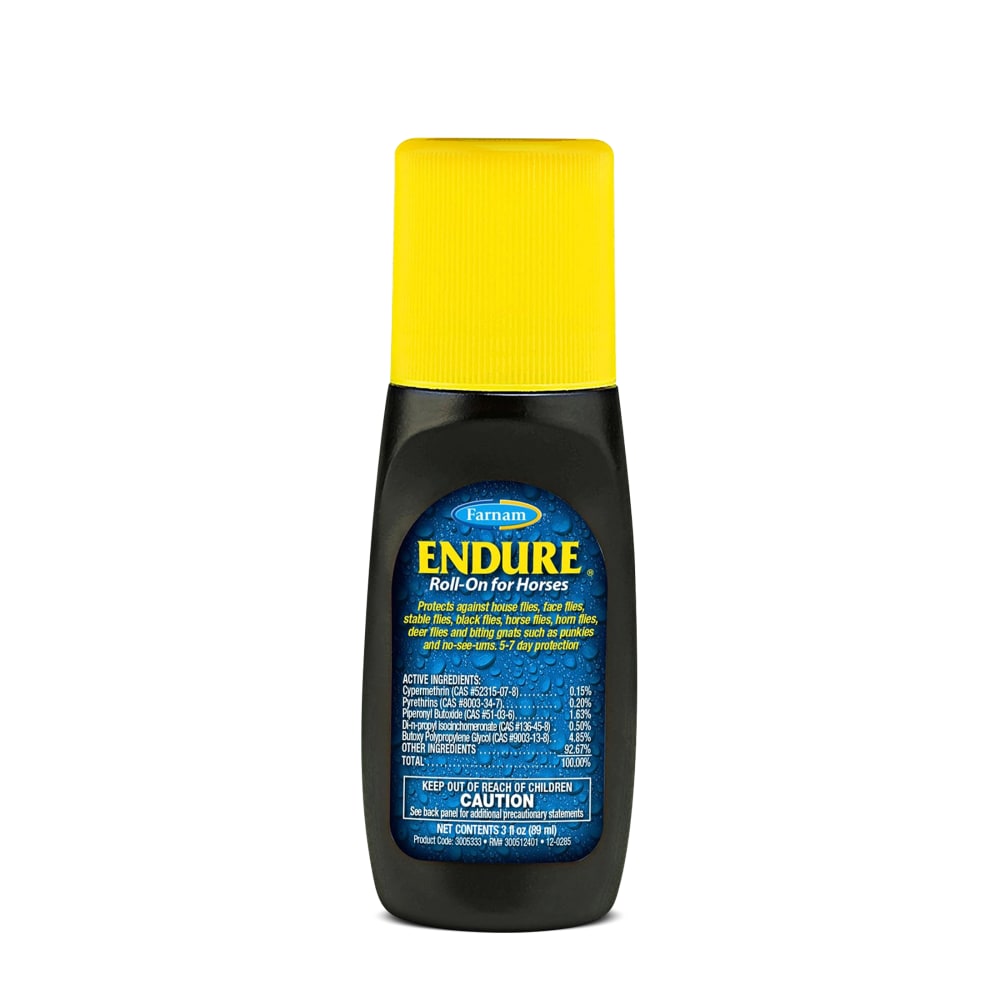
You can even switch it up and rotate products from day to day, depending on what you’re doing with your horse. For example, use Endure® Sweat-Resistant Fly Spray for Horses when you’ll be competing or riding all day, and your horse will be sweating.
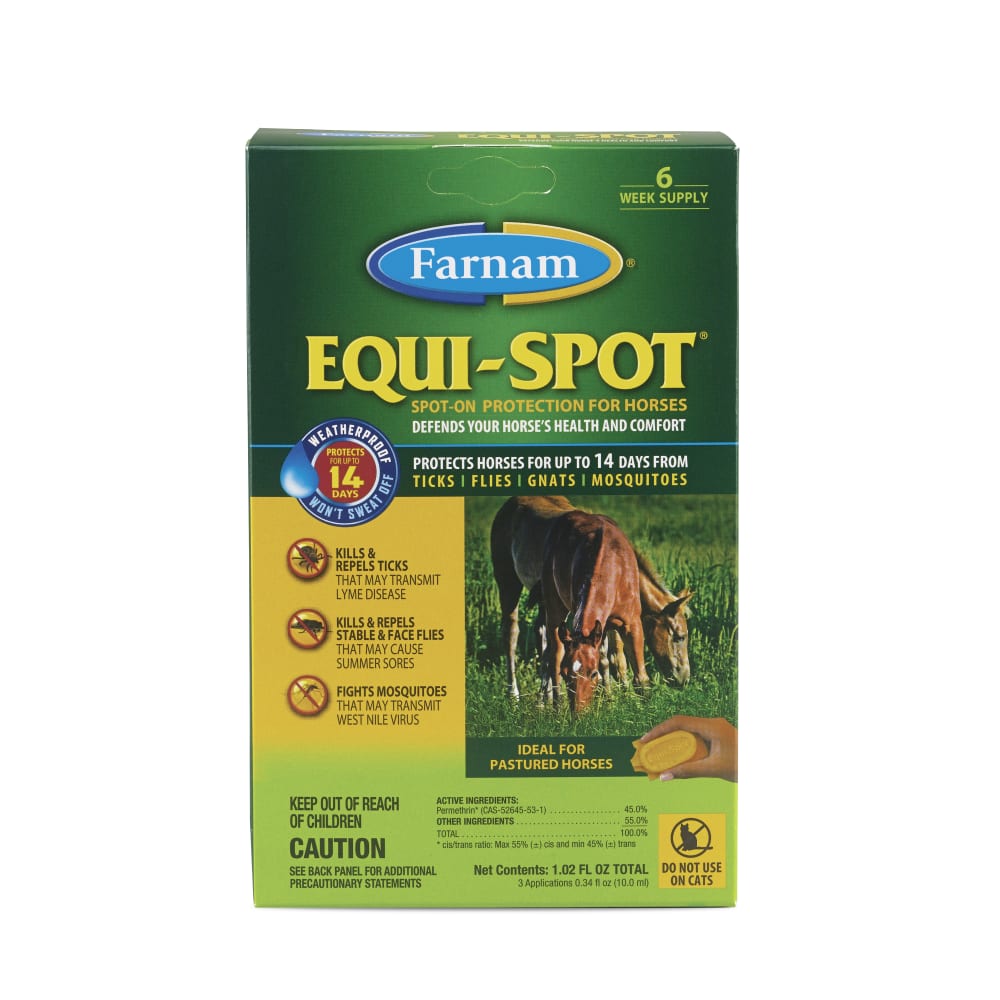
You can extend your rotation team to include more than fly sprays. For example, Farnam® Equi-Spot® Spot-On Protection for Horses is pyrethroid based. You could use this early or late in the season as part of the rotation. This topical long-lasting product excels in conditions when you don’t have the opportunity to spray your horse daily.
“It’s especially good for horses that are turned out 24/7 because it has weather/sweat resistant properties,” says Holderman.
You can always mix in products like Swat® Fly Repellent Ointment to protect around wounds and Repel-X® Lotion, which is great for the face, ears, under the belly and hard-to-reach places that need protection against flies.
Once you approach fly control with rotation in mind, you’ll find that each product works better as part of the team rather than on its own.
Every horse and every barn are different. Visit Farnam's No Fly Zone Fly Control Center to learn how to build a customized fly control program and rotation plan for your horse.
Life with Horses Newsletter
Sign up now to stay connected with free helpful horse care tips, product updates, and special offers.
Featured Products
Related Articles

Feed-Through Fly Control: A Practical Tool in the Fight Against Flies
A feed-through horse fly control product such as Farnam's SimpliFly is a great first step when it comes to fighting flies. This unique product breaks the fly life cycle by stopping them before they even start! Read on to learn why and how you should add a feed-through product to your fly control program.