Proper Equine Dental Care: More Than Just "Floating" Teeth
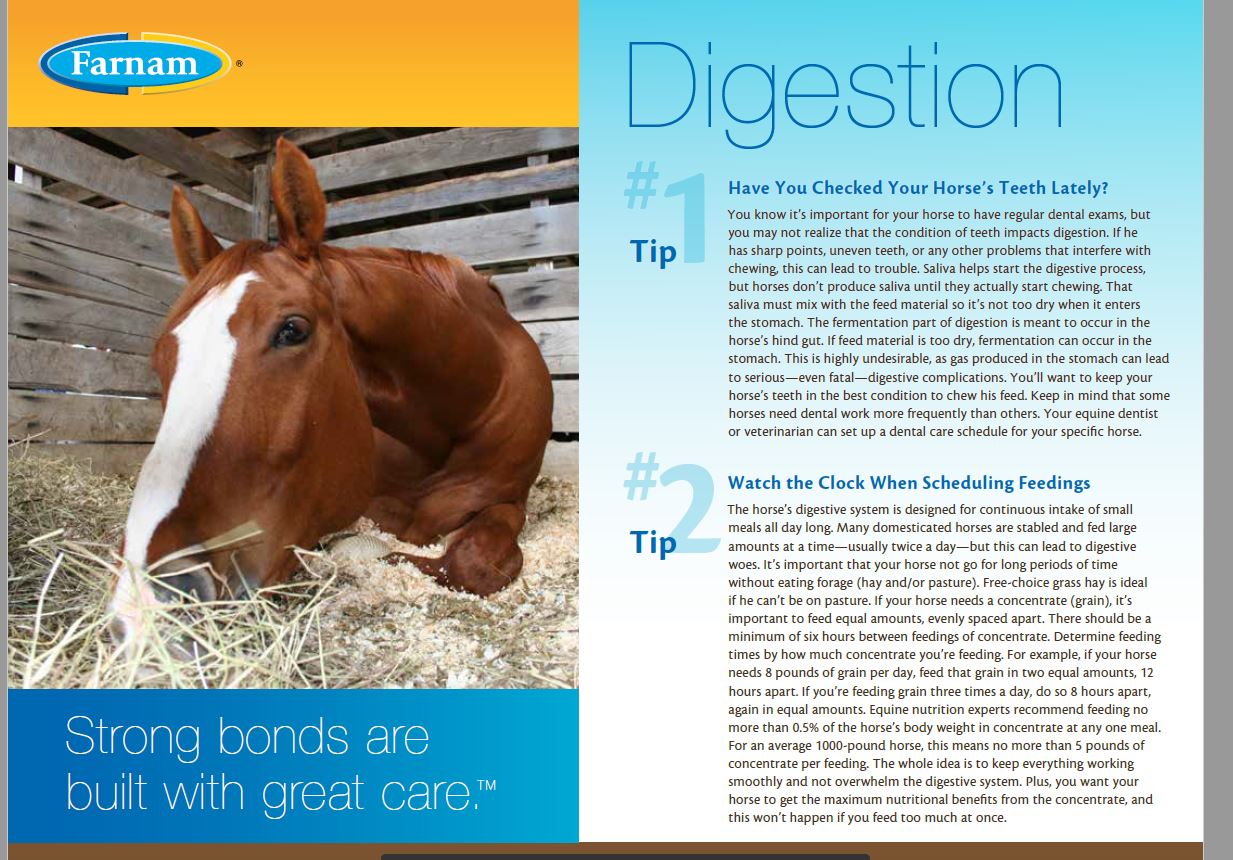
Whether you’re a lifelong horse owner or recently purchased your first horse, you’ve likely been told that proper dental care is an essential part of maintaining a horse’s health, comfort and performance. Because a horse’s teeth naturally wear down through chewing, dental problems can develop over time.
- A Closer Look at Equine Teeth
- Signs of Dental Issues
- Common Dental Problems
- Dental Exams
- Dental Care Needs
- Finding a Dental Care Provider
Without routine attention, these issues may lead to discomfort, difficulty chewing, weight loss, behavioral changes, or performance issues. Regular dental exams allow potential concerns to be identified and addressed early, helping horses eat comfortably, use feed efficiently, and remain healthy throughout every stage of life.
A Closer Look at Equine Teeth
Foals are typically born without teeth; their initial baby teeth start to appear in the first weeks of life. Starting at around 2 ½ years old, they gradually shed the baby teeth as their permanent teeth come in.
By approximately 5 years old, most horses have developed their full set of permanent teeth, known as hypsodont teeth. These permanent teeth have long crowns that continue to erupt gradually as the exposed tooth surfaces are worn down through chewing. "Horse teeth are more similar to rodent teeth than human teeth, because they are continuously erupting," says Bess Darrow, DVM, a veterinarian and certified dental technician who has had an equine dentistry practice since 2000 in the densely horse-populated area of Ocala, FL.
A horse’s teeth erupt at an average rate of 2-4 millimeters per year. This process continues until the horse reaches his twenties, when the reserve crown—the part of the tooth above the gum—may become depleted. As a result, older horses may have teeth that are worn down close to the gumline, become loose, or eventually fall out.
Not every horse has the same number of teeth. Adult horses have between 36 to 42 teeth, depending on the gender, with stallions and geldings having generally more than mares. There are 12 incisors (front teeth), which are used for biting and nipping off grass. Most male horses have four canine teeth behind the incisors. “Canine teeth are for fighting, which is why they are rarely seen in mares. If mares do have canines, they are very small,” says Darrow.
Most horses develop two small wolf teeth in the upper jaw. Because wolf teeth are generally located in the mouth where the bit sits and can cause discomfort, veterinarians routinely recommend removing them before the young horse is started under saddle or goes into training.
Farther back in the mouth are the cheek teeth—the premolars and molars—that do most of the grinding. A typical adult horse has 24 cheek teeth with six upper and six lower on each side. These teeth extend surprisingly far toward the back of the horse’s head. "If you look at the side of a horse's head, their teeth go back as far as their eyes," says Darrow. This is one reason a complete dental examination requires specialized equipment to properly evaluate areas that can’t be seen simply by lifting the horse’s lips.
A horse’s teeth are uniquely designed for grazing and grinding tough, fibrous forage. Horses chew with a broad, side-to-side motion that helps grind forage into smaller pieces before swallowing. Regular grazing should provide relatively even wear. However, the upper and lower jaws are different widths, and individual teeth do not always wear at the same rate. Over time, this can contribute to sharp enamel points, hooks, uneven surfaces, and other abnormalities that may make chewing uncomfortable or less efficient.
Signs of Dental Issues
Horses can be surprisingly good at adapting to dental discomfort, so problems aren't always obvious right away. "Not all horses with dental problems will show signs that something is wrong," says Darrow. "I see many horses showing no clinical signs who have significant issues upon examination. This is why the annual exam is so important.”
In some cases, subtle changes in eating habits, body condition, behavior or performance may be the first indication that something is wrong. Knowing what to watch for can help owners recognize potential dental issues and have them evaluated before they become more serious.
- Eating slowly or a difficulty chewing: taking longer to finish meals, chewing primarily on one side or appearing hesitant to eat
- Dropping feed while eating
- Quidding: balls or wads of partially chewed hay that drops from the horse’s mouth
- Bad breath: an unusually strong or unpleasant odor from the mouth can sometimes be associated with trapped feed or a damaged tooth
- Cuts or ulcerations on the cheek or tongue
- Excessive salivation: drooling may occur when chewing or swallowing is uncomfortable
- Facial or jaw swelling: swelling or tenderness can be a sign of a dental infection
- Undigested feed in manure: noticeable pieces of poorly chewed grain or long forage fibers in manure may suggest the horse isn’t grinding his food effectively
- Difficulty maintaining weight
- Changes under saddle: resistance or sensitivity to the bit, heat tossing, difficulty turning, opening the mouth or other performance issues can be associated with oral discomfort
- Changes in behavior: irritability, unusual movements with the head or mouth or reluctance to have the face or mouth handled/touched
Many horse owners think that if their horse drops feed while eating, it’s a clear sign of dental issues; however, that isn’t always the case. "Some horses are naturally messy, become distracted during meals or lift their heads frequently while chewing," Darrow explains. What matters most is recognizing a change from your horse’s normal eating habits. If a horse that’s typically a neat eater suddenly begins dropping feed or quidding, it may be worth investigating.
Interestingly, a lack of appetite doesn't normally tend to be a sign of dental issues. “Horses experiencing dental discomfort are still hungry and will adapt the way they chew to continue eating," notes Darrow. This is why it’s best not to wait for obvious symptoms before scheduling dental care.
Common Dental Problems
Even with normal tooth eruption and wear, horses can develop dental problems. Some issues are a natural result of the way equine teeth wear over time, while others may be related to age, tooth alignment, missing teeth, injury, or individual anatomy. Common dental problems include:
Sharp Points: One of the most common findings in horses is the development of sharp enamel points along the edges of the cheek teeth. The horse’s upper jaw is wider than the lower jaw, and normal chewing can leave areas of the teeth that do not wear evenly. Over time, these edges can become sharp enough to irritate or cause ulcerations on the cheek and tongue. A veterinarian can reduce these sharp points during a dental procedure commonly known as “floating.”
Hooks, Ramps, Waves and Uneven Wear: When the upper and lower teeth do not meet evenly, portions of a tooth may become excessively long. These abnormalities can develop into hooks, ramps, waves or other irregular wear patterns. Depending on severity, it may interfere with the horse’s normal side-to-side chewing motion and make it more difficult to properly grind feed.
A hook is a prominent overgrowth that forms when teeth are not worn properly by the opposing tooth. It resembles an eagle’s curved upper beak. A ramp is an overgrowth in which the tooth surface develops an angled or sloping shape, like a ski ramp. Ramps are commonly associated with uneven alignment of the upper and lower cheek teeth. “Wave mouth” is unevenness of wear that causes high and low spots in the horse’s mouth, preventing the opposing teeth from meeting and wearing properly.
Retained Caps: When young horses lose their baby teeth, occasionally part of a baby tooth, known as a cap, does not shed normally. Retained caps can cause discomfort, interfere with the developing permanent tooth and contribute to difficulty chewing or changes in behavior.
Loose, Broken or Missing Teeth: Teeth can become damaged due to trauma, decay or age. A fractured or loose tooth may cause pain and can sometimes become infected. Missing teeth also create problems: without an opposing tooth to provide normal wear, the tooth opposite the empty space may become excessively long.
Dental Exams
A thorough equine dental exam involves more than simply looking at a horse’s teeth. The exam typically begins with a review of your horse’s history, including age, diet, previous dental care and any changes you’ve noticed in eating, behavior or performance. Your veterinarian may also examine the horse’s head and jaw for swelling, tenderness, unusual odors or other signs of a potential problem.
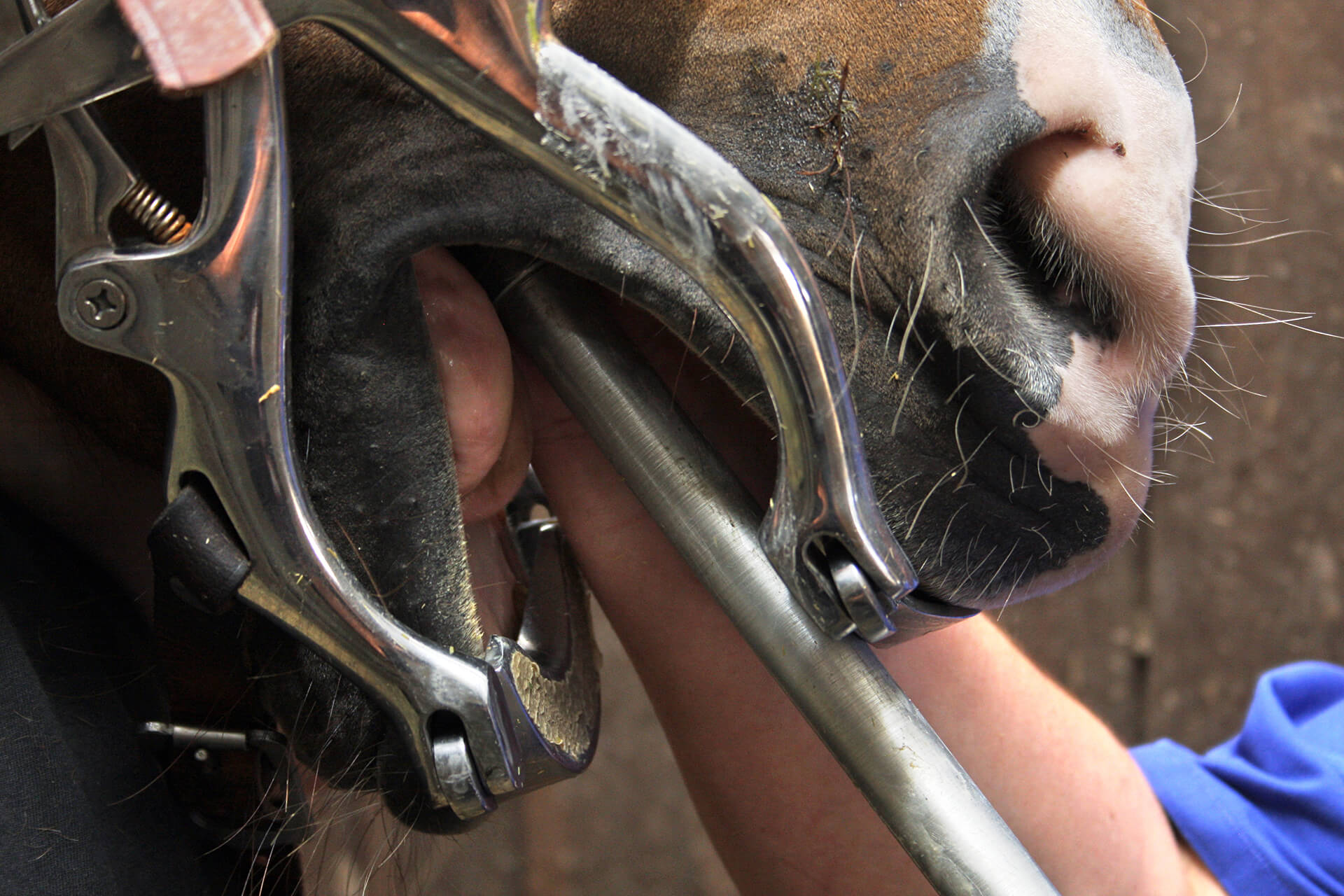
During a dental exam, horses are commonly given a mild sedative to help them remain relaxed, still and refrain from clenching their teeth. A device called a full-mouth speculum is used to safely hold the mouth open, allowing the dental care provider to visually inspect and feel the teeth, gums and other structures inside the mouth. A light and dental mirror or other specialized instruments may also be used to examine areas that are difficult to see.
During the exam, the veterinarian looks for sharp points, hooks, ramps, loose or fractured teeth, retained caps and other abnormalities. They will also evaluate how the upper and lower teeth meet and whether anything is interfering with normal chewing and jaw movement. "Just like at a human dentist, the provider should explain any issues or problems identified," notes Darrow.
If abnormalities requiring treatment are found, dental “floating” or “occlusal equilibration” may be performed to reduce sharp points and excessive overgrowths, or to correct malocclusion (misalignment of teeth when the jaws are closed) and balance the dental arcades.
"The shape of a horse's head and inherited poor mouth conformation can make some horses have a propensity for dental problems," notes Darrow. "For example, it’s common for minis or horses with smaller, more compact heads to have dental problems since there’s less space for their teeth, which increases the likelihood of crowding, misalignment and uneven wear.”
What is Teeth Floating?
Floating is the process of filing the horse’s teeth to remove sharp points and other problematic overgrowths. The procedure gets its name from a masonry term used to describe the process of leveling a row of bricks. Dental care professionals use an electric power instrument or hand file known as a “float” to reshape the teeth and create a more comfortable, functional chewing surface. The goal of floating isn't to make every tooth perfectly smooth or level; it’s to remove or correct abnormalities that could cause discomfort, irritate the cheeks or tongue, or interfere with normal jaw movement and chewing.
Dental Care Needs
Young, adult and geriatric horses each have their own dental needs. Foals should be examined at a young age to check for anomalies, like an overbite (parrot mouth) or underbite (monkey mouth). Corrective treatment on foals with these types of issues can begin within the first few months of life.
As young horses shed their baby teeth, it can sometimes result in mouth abnormalities. Wolf teeth may also be present and should be evaluated, particularly before introducing a bit. Because so much is happening in the mouth during this stage, young horses may need dental exams more frequently than adults. "If a horse starts on a consistent preventative dental program when it’s young, it will have well-balanced, healthy teeth that will function properly as it ages," says Darrow.
From the age of five onward, an annual exam should be sufficient for good preventative care since the dental focus shifts toward maintaining comfortable, efficient chewing and monitoring teeth wear over time.
Although horses with a history of dental abnormalities, unusual wear patterns or other concerns may need to be examined more often. If you buy a horse and have no idea of his dental history, it’s important to schedule an exam to get a baseline of his oral health and to make sure there aren't any potential dental issues brewing.
Dental needs can change significantly as a horse enters its senior years. With age, the reserve crowns of the teeth become shorter, and older horses are more likely to experience worn, loose or missing teeth and difficulty grinding forage. Dental care at this stage is often more about preserving comfortable chewing, identifying painful or unhealthy teeth, and adapting management to the horse’s changing needs.
Sometimes a senior horse's molars become so worn that they can no longer properly chew hay. When this happens, changes to the feeding program will need to be made to ensure he receives adequate nutrition. For example, hay cubes or pellets soaked in water to create a "mash" can be a great replacement for hay. Switching to a complete senior feed, which is easier to chew and digest, is another option. All feed changes should be made gradually to avoid gastric upset.
Ultimately, there is no single dental schedule that is right for every horse. Your dental care provider will help to establish a routine based on your horse’s age, dental history, diet and individual needs.
Finding a Dental Care Provider
Many veterinarians offer routine dental services, but if yours doesn’t, ask him or her to recommend a qualified professional who does. Since sedation is commonly used during dental exams—and must be administered by a licensed vet—the person providing dental care should either be a vet or work with one. "Make sure to use a qualified dental care provider who performs a thorough dental exam, not just someone who does a quick hand float without ever looking inside the mouth," says Darrow.
Before choosing a dental care provider, ask about their training, experience and credentials. The Academy of Equine Dentistry and the International Association of Equine Dentistry (IAED) are both reliable sources of certification and horse owners can visit their websites to search for a certified dental care provider in their area. Another option is to check with equine hospitals and university vet schools in the vicinity, as they often have someone on staff who does dental work.
Supporting Dental Health
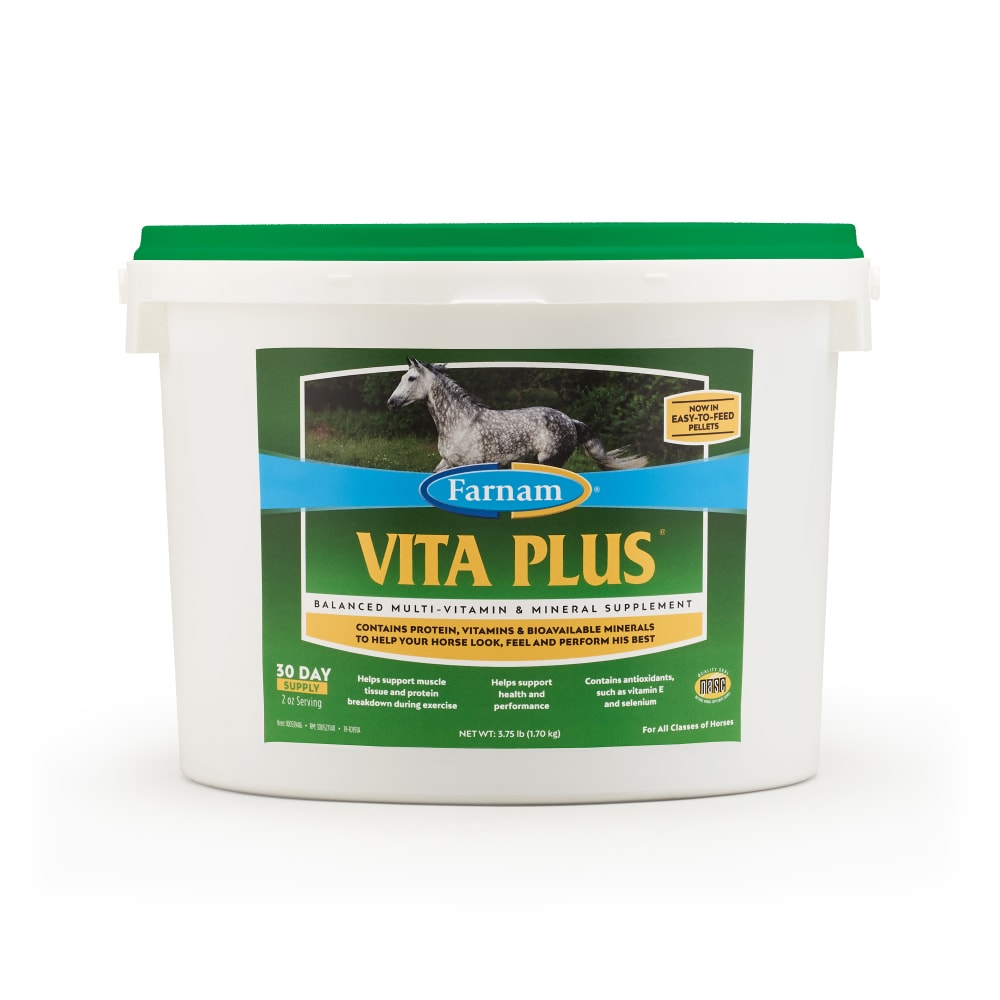
While there aren’t any oral health products that can help with physical dental problems, certain nutrients can support the tissues that make up and surround a horse’s teeth. A well-balanced diet should provide adequate calcium and phosphorus, which are important for maintaining normal bones and teeth. Vitamin D plays a role in calcium and phosphorus metabolism, while vitamin C, vitamin E, copper and zinc contribute to normal tissue health. A comprehensive vitamin-mineral supplement, such as Farnam® Vita Plus supplement may complement good dental care by helping provide nutrients needed for normal tissue and bone health.
Supplements that combine probiotics and digestive enzymes, like Farnam® Probiotic Powder, can support a healthy population of beneficial bacteria in the digestive tract. This can be especially valuable for horses whose dental challenges make efficient chewing more difficult. Supporting normal digestive function helps horses make the most of the feed and forage they consume.
Good dental care is more than keeping a horse’s teeth healthy; it plays an important role in comfort, nutrition, digestion and well-being. Routine dental exams can help identify oral concerns before they develop into significant problems, while attentive daily management can help horse owners keep their horse comfortable, chewing effectively and feeling his best for years to come.
Life with Horses Newsletter
Sign up now to stay connected with free helpful horse care tips, product updates, and special offers.
Featured Products
Related Articles
Dealing with Wounds: When and Why to Call the Vet
Whether your horse is at home, in the trailer, on a trail ride or at a competition, there’s never a “good” time for an injury. But because accidents can and do happen, you should know ahead of time what to do when your horse gets hurt. Many times, you won’t see exactly what happened and the wound can be hours old before it’s discovered. You arrive at the barn in the morning only to find your horse was injured sometime during the night. Or you show up to feed in the evening and see that your horse was hurt in the hours since you last saw him...