Water, Electrolytes and the Performance Horse
Whether competing, pleasure riding, trail riding or simply staying active, horses must work harder during the summer to regulate their body temperature. As a result, proper hydration and electrolyte management become critical components to maintaining health, comfort, and performance.
Dehydration has a profound and immediate impact on a horse’s wellbeing, more so than the deficiency of any other nutrient. While the body can withstand losing nearly all its fat and more than half of its protein content, losing as little as 10% of its water content can result in serious consequences.
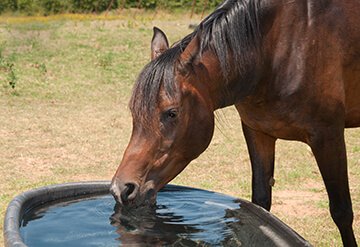
On a cool day with low humidity, an adult horse will typically consume between 8 and 12 gallons of water per day. However, factors such as weight, activity level, type of forage, diet, and environmental conditions can significantly influence an individual’s water requirements. During hot weather or intense exercise, a horse can lose several gallons of fluid through sweat each day, making increased water intake essential for maintaining hydration and performance.
- How Diet Influences Water Intake
- How Exercise Affects Water Requirements
- Understanding Equine Sweat
- How to Determine "Comfort Index" and Hydration
- Guidelines to Keep Horses Cool and Hydrated
How Diet Influences Water Intake
A horse’s diet can have a significant impact on its daily water requirements. Horses consuming large amounts of hay and/or grain typically require more water, as dry feeds contain relatively little moisture. Diets high in protein or salt can further increase water consumption because additional water is needed to support normal metabolic processes and maintain fluid balance.
Conversely, horses grazing on lush, green pasture often obtain a substantial amount of their water needs directly from the forage, as it may contain 60-80% moisture. As a result, these horses may drink less from water sources than those fed primarily dry feeds.
Feed composition can also influence hydration needs. Highly digestible feeds may decrease water intake, as they are broken down and absorbed more efficiently in the digestive tract. Since water is needed to moisten feed, support digestion, and move digesta through the gastrointestinal tract, a highly digestible feed generally requires less water for processing. In addition, diets containing a high fat content can decrease water requirements because they lower the amount of heat produced during digestion, commonly referred to as the heat of digestion or heat increment.
How Exercise Affects Water Requirements
Exercise significantly increases a horse’s need for water, especially during hot and humid weather. During the summer, moderate work may increase water requirements by approximately 60-80%. Intense exercise may double or even triple daily water consumption as a horse replaces fluids lost through sweat and works to maintain normal body temperature.
When a horse metabolizes feed, a relatively small portion of the energy consumed is converted into mechanical work (movement), while the majority is released as heat. As exercise increases, so does heat production; thus, creating a greater need for the horse to dissipate excess body heat through sweating and respiration. If heat cannot be effectively dissipated, the horse’s body temperature could rise to dangerous levels within minutes.
To prevent overheating, horses rely primarily on evaporative cooling. Sweating is the most important cooling mechanism for horses, accounting for most of the heat loss during exercise, while evaporation from the respiratory tract also plays a significant role. Air movement further helps in the effectiveness of these cooling processes; however, high humidity can significantly reduce the efficiency of evaporation, making it more difficult for horses to regulate body temperature.
On a cool day with low humidity, an adult horse will typically consume between 8 and 12 gallons of water per day.
Even during relatively short periods of exercise, a substantial amount of heat is generated. To offset this heat load, horses can produce significant amounts of sweat, especially during training, hauling, turnout, or long show days. During the summer, a horse will typically sweat 1-4 gallons per hour depending on the workload and temperature-humidity index. When fluid losses are significant, it’s paramount that electrolytes lost in sweat are replaced shortly after the activity, since it may take a day or two to replace what has been lost.
Understanding Equine Sweat
Produced by sweat glands located throughout the skin, a horse’s sweat is comprised of water and important electrolytes such as sodium, chloride, potassium, calcium, and magnesium. These minerals play a vital role in hydration, temperature regulation, digestion, and muscle function. Without adequate replenishment, horses may become fatigued, experience muscle weakness or recover more slowly.
Unlike human sweat, equine sweat contains a unique protein called latherin, which acts as a natural surfactant, helping sweat spread across the hair coat rather than bead up on the surface. This increases the surface area available for evaporation and enhances the horse’s ability to dissipate heat. Applying cool water over the horse’s body is one of the most effective ways to enhance cooling. Focus on thoroughly wetting the large muscle groups and areas with major blood vessels, including the neck, shoulders, chest, back, and hindquarters, and repeat the process as needed. In dry conditions with good airflow, allowing some water to evaporate naturally off the hair coat may further enhance cooling. However, in hot, humid conditions, scraping between hosing can help remove water that has warmed on the horse's body, allowing fresh cool water to contact the skin.
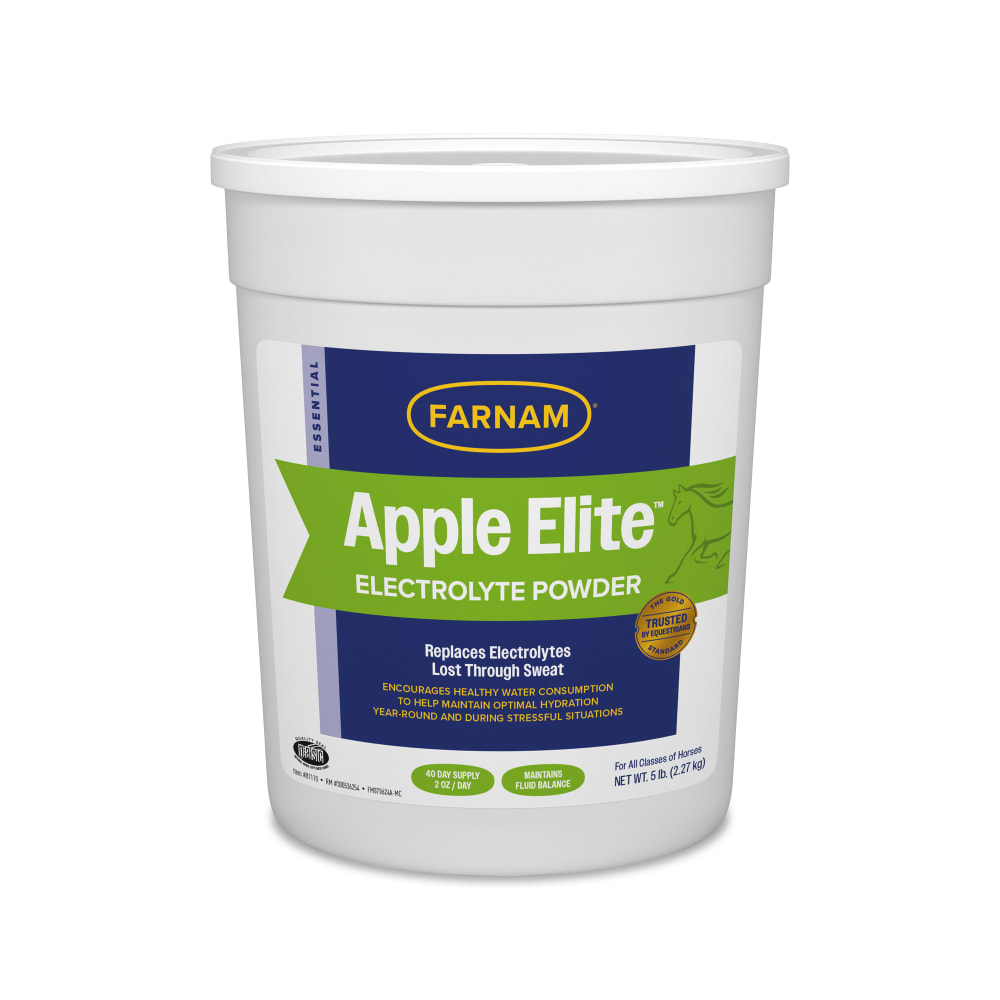
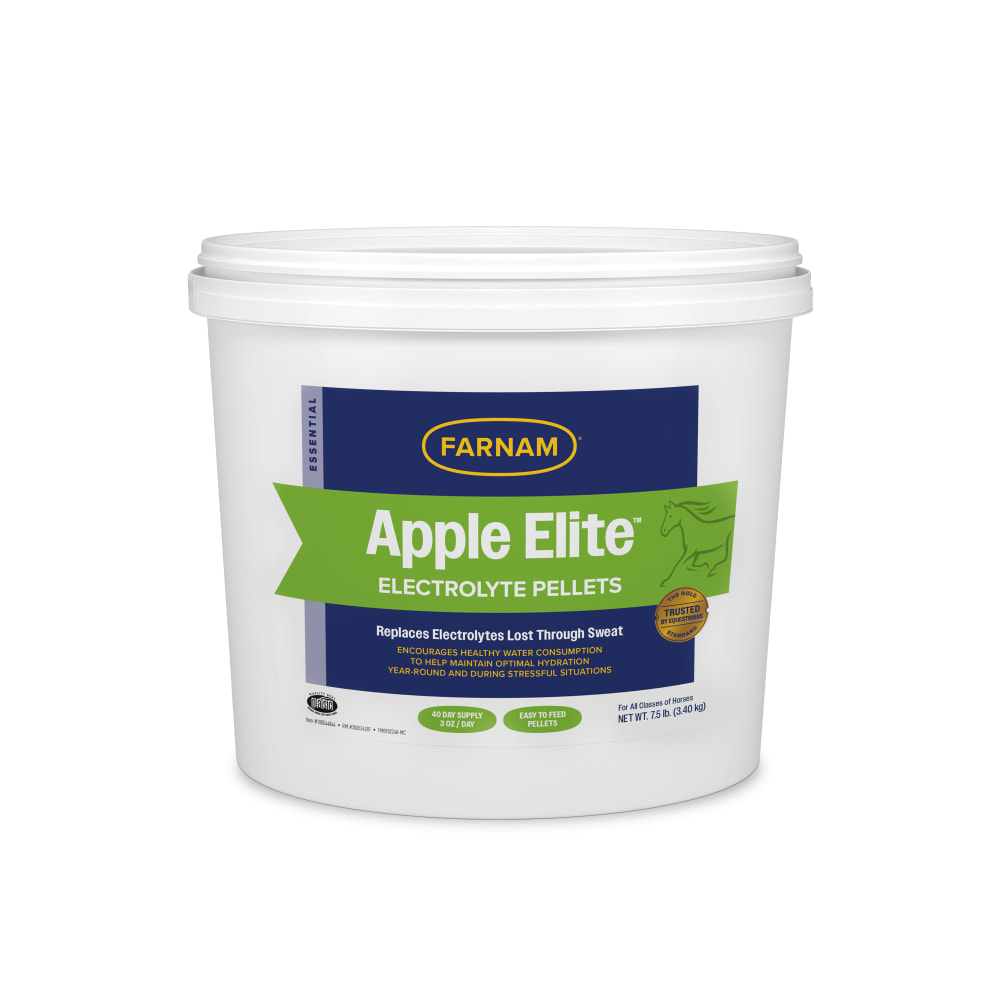
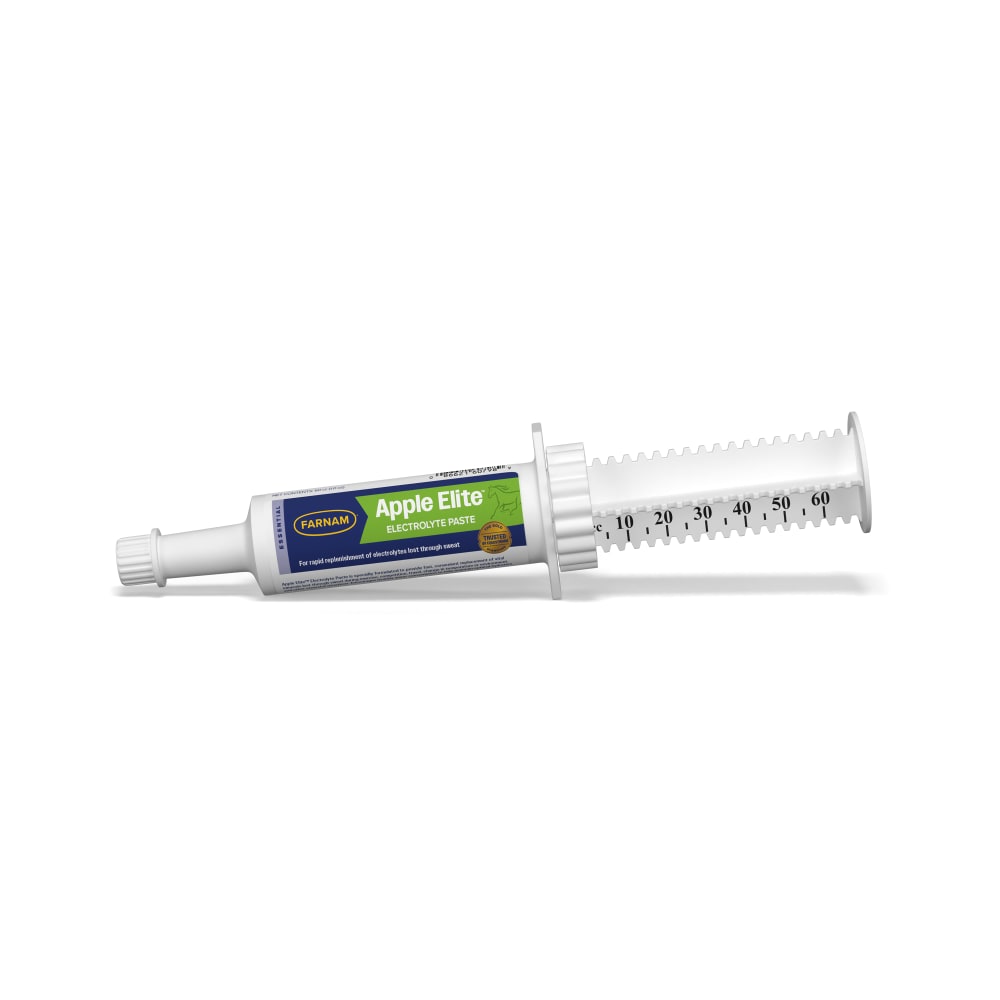
Horse sweat contains approximately 2-4 times more electrolytes overall than human sweat, with particularly high concentrations of sodium and chloride. Because the electrolyte composition of equine sweat differs significantly from that of humans, sports drinks formulated for people, like Gatorade®, are not appropriate options for horses. Feeding a good electrolyte formulated specifically for horses, such as Farnam® Apple Elite™ electrolytes, is imperative to replenishing the mineral levels.
When choosing an electrolyte product, horse owners should look for formulas designed specifically for horses, as well as evaluating their horse’s individual needs, workload, and environment, as hydration needs can vary greatly from one horse to another. Electrolytes are offered in multiple forms, such as paste, powder and pellets, to cater to the situation, horse’s preferences and specific feeding regimen. A powder electrolyte is a good choice when adding electrolytes to the feed on a daily basis; they are often the most economical option and can be easily adjusted based on workload, weather conditions and sweat loss. Pelleted electrolytes offer a convenient and palatable way to provide daily electrolyte supplementation to horses that are picky eaters or sort through feed. Paste electrolytes are an excellent means to use at competitions, on the trail, during travel or any time when rapid replenishment is needed. Most horse owners use a combination approach —powder or pellets for daily supplementation with paste electrolytes during competition, travel, or particularly demanding conditions. Regardless of the form used, look for products where sodium and chloride are the primary ingredients, and remember to always provide access to fresh water.
How to Determine "Comfort Index" and Hydration
As temperatures and humidity rise, it's important to monitor your horse for signs of heat stress and dehydration. One simple way to gauge if your horse is at risk is to add the outdoor temperature and the relative humidity. If that number is over 150, there is a potential for overheating and extra caution should be taken. As conditions become hotter and more humid, additional precautions such as reducing workload, providing shade, and ensuring access to fresh water become increasingly important.
Dehydration can develop quickly in horses with excessive sweating and reduced water intake. Common signs of dehydration include:
- Dry or tacky gums and mucous membranes
- Prolonged capillary refill time
- Decreased skin elasticity
- Dry, firm manure
- Decreased urination or dark-colored urine
- Lethargy
- Sunken or dull-looking eyes
- Lack of saliva
- Increased plasma protein concentration,/li>
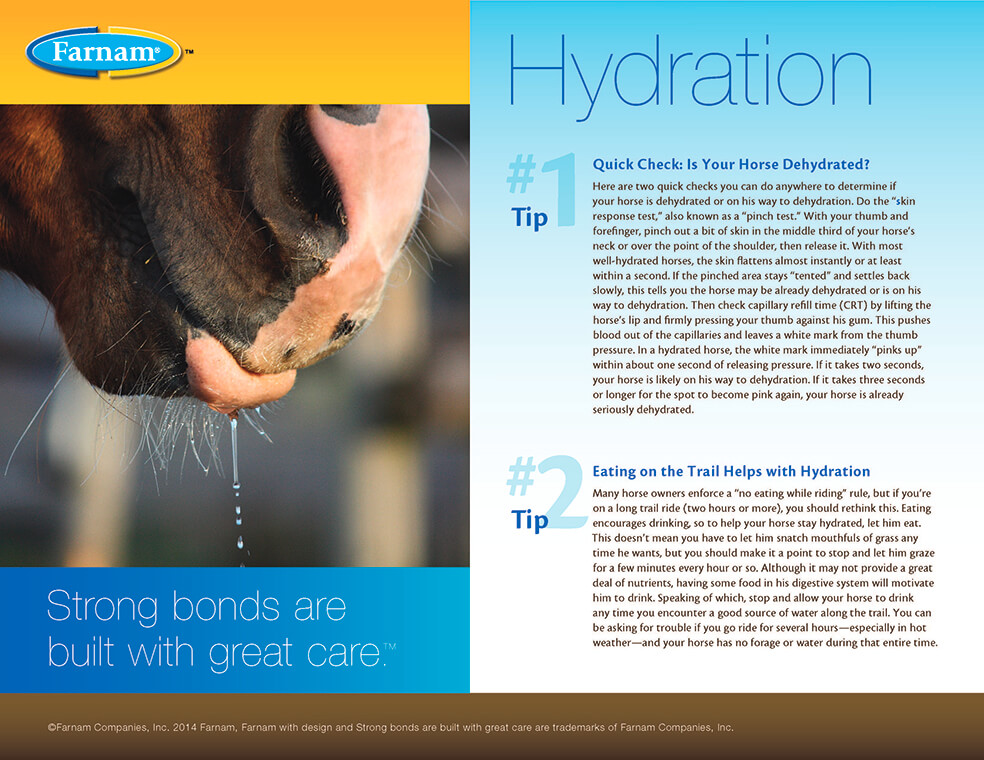
To measure the capillary refill time, press a finger firmly against the horse’s gums, release and watch to determine how long it takes for color to return. In a well-hydrated horse, the color should return in approximately 1-2 seconds. Another useful assessment tool is the skin pinch test. Gently lift or “pinch” a fold of skin, preferably over the shoulder, and release. The skin should return to normal in less than 1 second for hydrated horses. It’s important to note that the skin over the neck is not a good choice to use in checking skin elasticity, as it tends to be looser and stand-up more easily, and may produce a misleading indication of dehydration.
Guidelines to Keep Horses Cool and Hydrated
While individual requirements vary, the following guidelines can help keep horses comfortable, maintain hydration and support performance during hot weather:
- Provide unlimited free access to clean, fresh water at all times, especially when electrolytes are provided. Cool, clean water is preferred because it encourages water consumption and helps support the horse's cooling mechanisms.
- Monitor daily water intake.
- Clean buckets and troughs regularly.
- Feed plenty of forage. Adequate forage intake supports normal gut function and helps maintain the large reservoir of water stored within the digestive tract.
- Understand the relationship between the type of feed and water intake. Hoses kept on a lush pasture will probably drink less water than those fed hay.
- Increase water availability during travel and competitions. Changes in environment, routine and water sources can reduce water intake, so be sure to offer water frequently or consider bringing water from home for horses that are reluctant to drink unfamiliar water.
- Encourage drinking before and after exercise. After exercise, begin cooling measures promptly and offer fresh water, as most horses can safely drink while cooling down.
- Provide free-choice salt year-round, even when using electrolytes, to encourage adequate water consumption and help maintain fluid balance.
- Consider adding an electrolyte to the horse’s diet. Performance horses and heavy sweaters can lose substantial amounts of electrolytes through sweat.
- Electrolytes containing small amounts of sugar can enhance sodium and water absorption in the small intestine.
- Do not add electrolytes to water. This usually results in a decrease in water intake due to the unpalatable salty flavor of the water.
- Schedule exercise during cooler parts of the day. Riding early in the morning or later in the evening can reduce sweat losses and the risk of heat stress.
- Apply cool, running water over the horse’s body during hot weather.
- Monitor for signs of dehydration.
- Know your horse’s normal stats and habits. Each horse is an individual, so it’s important to know the normal temperature, pulse, and respiration of your horse. A sudden decrease in water consumption, appetite, or performance could be early indicators of dehydration.
In the performance horse, hydration is more than a management practice – it's a critical component of athletic success. By proactively managing water intake, electrolyte balance, and workload, horse owners can help their horses better handle the challenges of heat, training, travel, and competition.
Gatorade is a registered trademark of Stokely-Van Camp, Inc. Apple Elite is a registered trademark of Farnam Companies, Inc.
Life with Horses Newsletter
Sign up now to stay connected with free helpful horse care tips, product updates, and special offers.