When Horses Need Help Maintaining Weight
Most weight conversations with horses revolve around overweight horses and how to manage their weight control; however, what about the otherwise seemingly healthy horse that just can’t keep weight on? The reasons may vary, but veterinarians routinely see equine clients that are thinner than they should be, observes Armon Blair, DVM, a veterinarian with Ocala Equine Hospital in the densely horse-populated area of Ocala, FL. The most common types of underweight horses that Blair sees are senior horses and lactating mares.
When a client calls Dr. Blair with concerns that their horse is too thin, he asks several questions upon examining the animal to try to identify the reason for the weight loss:
- How old is the horse?
- What type of hay and grain is he being fed?
- When was the last time his teeth were checked?
- What is his deworming program?
The answers to these questions can help guide veterinarians to plan the best way for a horse to achieve and maintain optimal weight.
More protein or calories?
There are many different reasons a horse can become thin. For starters, observing body condition may give an indication of what your horse is lacking. As Blair explains, if a horse's ribs are showing, he more than likely needs more calories. When muscle mass is depleted causing the topline to be more prominent than it should be, it typically indicates that the horse needs more protein in the diet. When a horse is both ribby and has lost muscle mass, this is a clear sign the horse needs more calories and more protein.
Blair adds that when a horse weighs less than he should and has a poor, dull hair coat, it can be a reason for concern. It could indicate an underlying health issue, such as parasites, or that the feed he’s eating is of poor quality.
How much weight is needed?
If you have concerns that your horse is too thin, it's a good idea to have your veterinarian do a complete medical examination. Once he or she rules out any health issues, you can come up with a plan together to help the horse achieve and maintain his optimal weight.
The Henneke Body Condition score (BCS) system is a helpful tool that is widely used to evaluate a horse's physical condition. To learn how to use the system and what each body score looks like, simply do an internet search for "Henneke Body Condition Scoring System.”
The BCS system is a numerical scale ranging from 1 (thinnest) to 9 (fattest) and is based on palpating or feeling for fat cover in four primary areas on the horse. For the average, adult horse (not a pregnant mare or a highly fit equine athlete), a body condition score of 5 (considered "moderate") on the BCS scale generally means the horse is at a good weight. If you're looking for a range, it would be a body condition score of 4 to 6, not thinner or heavier.
With a score of 5 on the BCS system, ribs cannot be seen but you can easily feel them when you run your hand along the horse's sides. "A good rule of thumb is that you should always be able to feel the ribs even if you can't see them," says Blair.
Unless you have a livestock scale handy – which most horse owners don't– using a weight tape can help gauge your horse's current weight. Measure around the heart girth according to tape directions to get the most accurate weight. Using this information, your veterinarian can determine approximately how much weight the horse needs and suggest a feeding program to safely achieve and maintain that weight. If there are any conditions that need to be addressed, such as dental work or deworming, it’s best to make sure that these are done promptly.
Start with forage
Although horse owners often think more grain is needed when a horse is too thin, Blair reminds them that high quality forage (pasture and/or hay) should always be the foundation of every equine nutrition program. His top recommendation for most horses needing more pounds would be an alfalfa-grass mixed hay, such as alfalfa-timothy or alfalfa-orchard grass.
If increasing the quality and amount of forage isn't sufficient for the horse to achieve and maintain optimal weight, he may need a feed concentrate ("grain") or a weight support supplement added to his diet.
Consider your feed
Blair urges owners to consider the type of feed concentrate being given rather than just the amount. He strongly recommends using a name brand commercial equine feed designed for the horse's use and class, such as growth, broodmare, performance, maintenance or senior. Nursing mares, growing horses, hard-working horses and seniors all require different feeds targeted to their specific nutrient demands.
"With nutrition, you get what you pay for, and above all else, use feed designed for horses, not a general livestock feed," advises Blair. He points out that feed intended for cattle can contain ingredients toxic to horses, so it's important to use balanced commercial feeds formulated for equines.
Check the amount
A common mistake horse owners make is feeding by the scoop, instead of actually weighing the feed. If you read any feed bag label, you'll see the directions on how much to feed are given in pounds, not scoops.
"A scoop is not a scoop is not a scoop! Feed should be weighed," notes Blair, who says that many times owners think they are feeding more than they actually are. A simple kitchen scale is inexpensive and should be in every barn. This allows horse owners to know how many pounds of feed they’re giving their horse. You can still put that feed in a scoop to dump it in the bucket or feed tub--just weigh it first!
Add a fat supplement
For horse owners that already have their horse on good forage and appropriate commercial feed, "fat is the next thing veterinarians recommend as an additional source of calories. Fat is a very calorie-dense source of energy," says Blair. Adding calories from fat rather than from starch (grain) is recommended for horses that tend to be more nervous or high-energy, and can be a good way to help senior horses maintain weight.
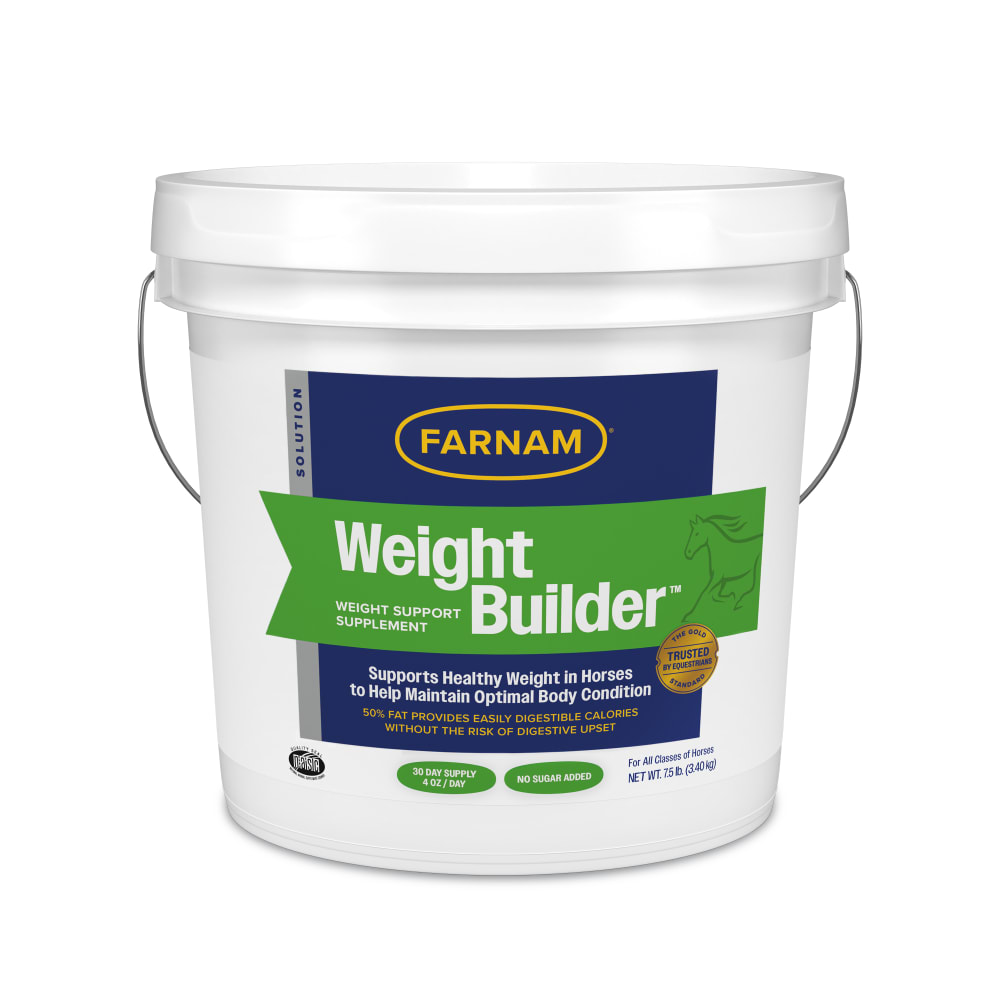
However, not all fat sources are the same. Some horse owners add oil to their horse's grain when extra calories are needed, but that isn't always appetizing to the horse or easily digested. When a calorie-dense option is needed, you will typically be better off feeding a specially formulated fat supplement that contains flaxseed meal and stabilized rice bran, like Weight Builder, to provide easily digestible calories without the risk of digestive upset.
Senior horse concerns
"Horses are like people in that some age better than others," says Blair. In addition, he finds that many owners don't keep up with regular dental exams and a deworming program after a horse is retired and not being ridden routinely.
When called to a farm to assess a thin senior horse, Blair often finds that these horses have poor dental conditions. Teeth may be missing or molars may be so worn down that the horse can no longer properly chew hay. If forage is not chewed properly, the horse's body won't absorb all the nutrients in it, and becomes less efficient. In both situations, it makes sense for the horse to be on a senior feed. Commercial feeds designed for senior horses are formulated to meet all nutrient requirements, even if horses cannot chew long-stemmed forage.
If your older horse can still eat hay, he won't need as much senior feed as a horse who is totally dependent on it for all his nutrition. Follow label directions and weigh the feed to be sure you are feeding the correct amount. When switching to senior feed from another feed, do so gradually over the course of about a week's time to help avoid digestive upset.
How long will it take?
"Unless a horse has been starved, I tell people it can take several months to see a significant change in weight for the average horse, so you have to be patient," says Blair. Just to go from a score of 4 to 5 on the BCS system, a horse needs about 45 to 50 more pounds. So, if a horse is too thin, say a body score of 3, he'll need about 100 more pounds to get up to a score of 5.
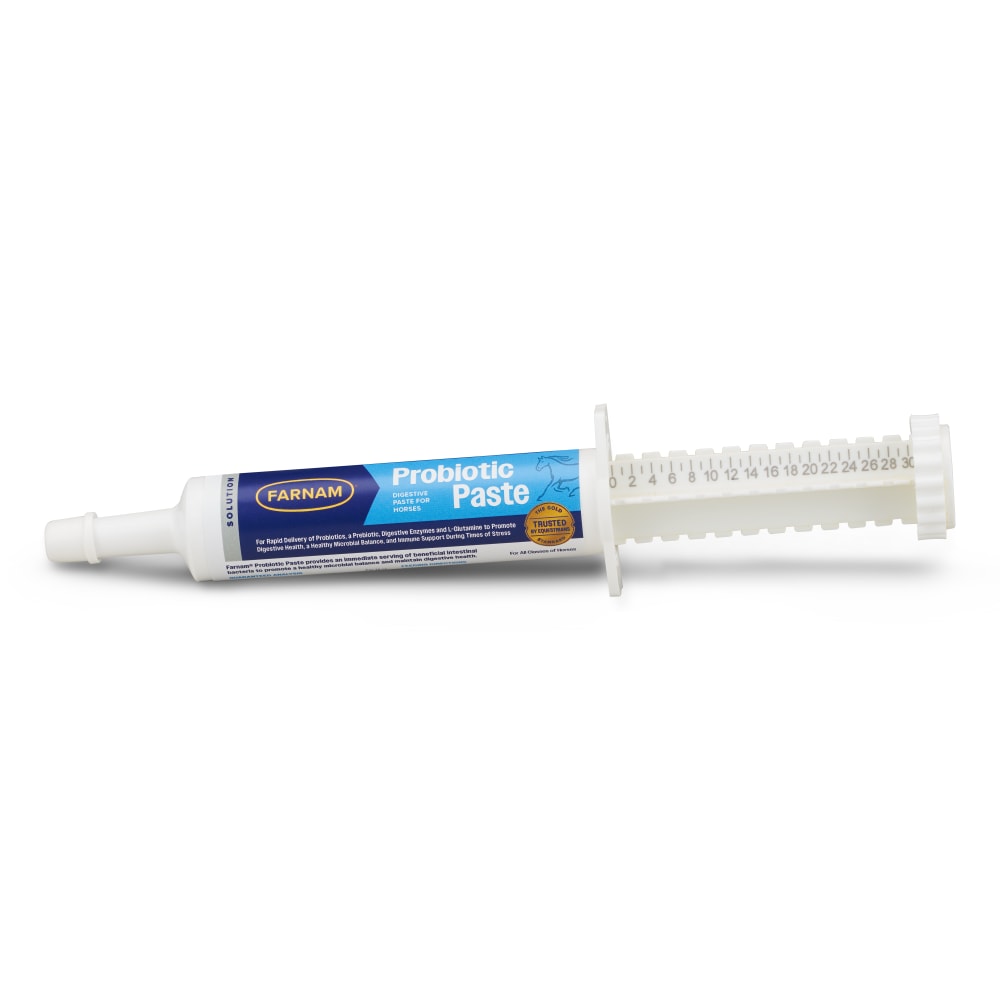
Keep in mind, though, that drastic diet changes can cause digestive upset, so it's safest to feed for slow accumulation of pounds. Your veterinarian can help you plan the best course of action, and it may be wise to feed probiotics, such as Farnam Probiotic Powder, during this time to support a stable intestinal environment, optimal digestion and nutrient absorption. Blair explains that 90 days is a realistic time frame for a horse that needs about 100 more pounds.
Bottom line? If your horse has lost weight or is having trouble keeping it on, it's time to call your veterinarian to figure out a plan of action.
Life with Horses Newsletter
Sign up now to stay connected with free helpful horse care tips, product updates, and special offers.