
Three Common Horse Hoof Care Mistakes and How to Avoid Them
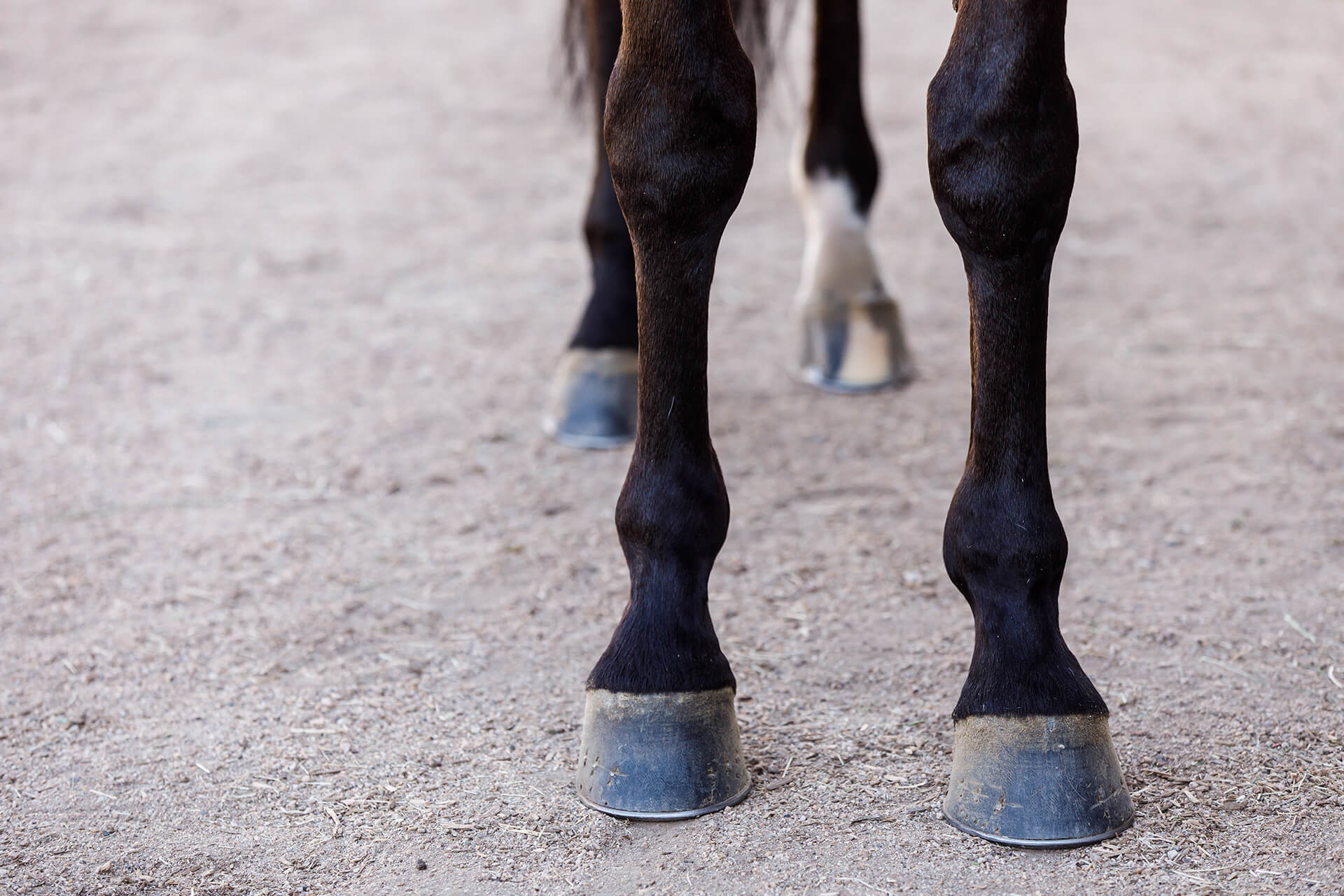
Good horse hoof care starts with three basics: clean and inspect your horse’s hooves daily, provide clean and appropriately dry footing, and support healthy hoof growth with balanced nutrition. Horses also need regular trimming or shoeing by a qualified farrier. Paying attention to these areas can help owners spot potential hoof problems early and maintain strong, healthy hooves.
- Mistake #1: Skipping Daily Horse Hoof Care and Cleaning
- Mistake #2: Keeping Horses Confined in Overly Wet or Overly Dry Conditions
- Mistake #3: Overlooking Nutrition for Healthy Horse Hoovess
- Frequently Asked Questions
To learn the three most common hoof care mistakes, we turned to Tom Curl, a specialist farrier based in Vero Beach, Florida. Curl focuses on sport horse lameness and travels extensively to work on challenging cases. Recognized worldwide as an expert in patching quarter cracks and using glue-on shoes, Curl has worked on many prominent horses, including repairing the quarter cracks that plagued champion Big Brown, winner of the 2008 Kentucky Derby-G1. Curl has been a farrier since 1972 and was inducted into the International Horseshoeing Hall of Fame in 2006.
Curl urges owners to pay attention to the following areas to give horses the best opportunity for soundness. “All three are intertwined and part of the essential equation for healthy hooves,” he notes.
Mistake #1: Skipping Daily Horse Hoof Care and Cleaning
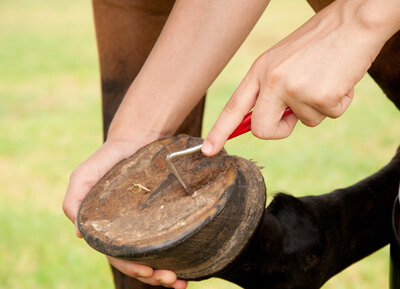
Daily observation – including picking out all four hooves – is one of the easiest ways to know what’s happening with your horse’s feet. Do you notice any cracks, chips, foul odor, unusual heat, tenderness or loose shoes? These are all common warning signs of hoof problems. Early detection can help with prognosis and recovery. However, many owners only clean hooves when it’s time to ride or before the farrier arrives.
“A lot of people don’t even put eyes on their horses’ feet every day. Many times a problem has started to develop, but it’s missed early because people weren’t looking at the feet daily,” says Curl. “You always want to find something before your hoof care professional finds it.”
Develop a regular hoof care program and stick to it, but evaluate it throughout the year in case changes are necessary. For example, your horse may require hoof conditioner at certain times of the year, but not year round. During wet seasons, your farrier might suggest using a hoof product that fights bacteria.
Daily observation, including picking and cleaning hooves, is the best way to know what’s happening with your horse’s feet.
Regular care includes routine visits from a hoof care professional, whether your horse wears shoes or is barefoot and just needs trimming. Many horses are trimmed or shod approximately every 5-8 weeks. However, time between visits may vary slightly depending on your individual horse, how often you ride, time of year and region. Work with your farrier to establish the right schedule for your horse.
Mistake #2: Keeping Horses Confined in Overly Wet or Overly Dry Conditions
“Wild horses’ hooves are constantly self-cleaning because the horses are on the move, so whatever is trapped in their hooves falls out. But when we put horses in a small area that is wet and muddy or dry and sandy, this is not healthy for the hoof,” Curl notes. “All the good feed you’re giving and great products you’re using can’t compete if you have the horse turned out in poor conditions for six to 10 hours a day.”
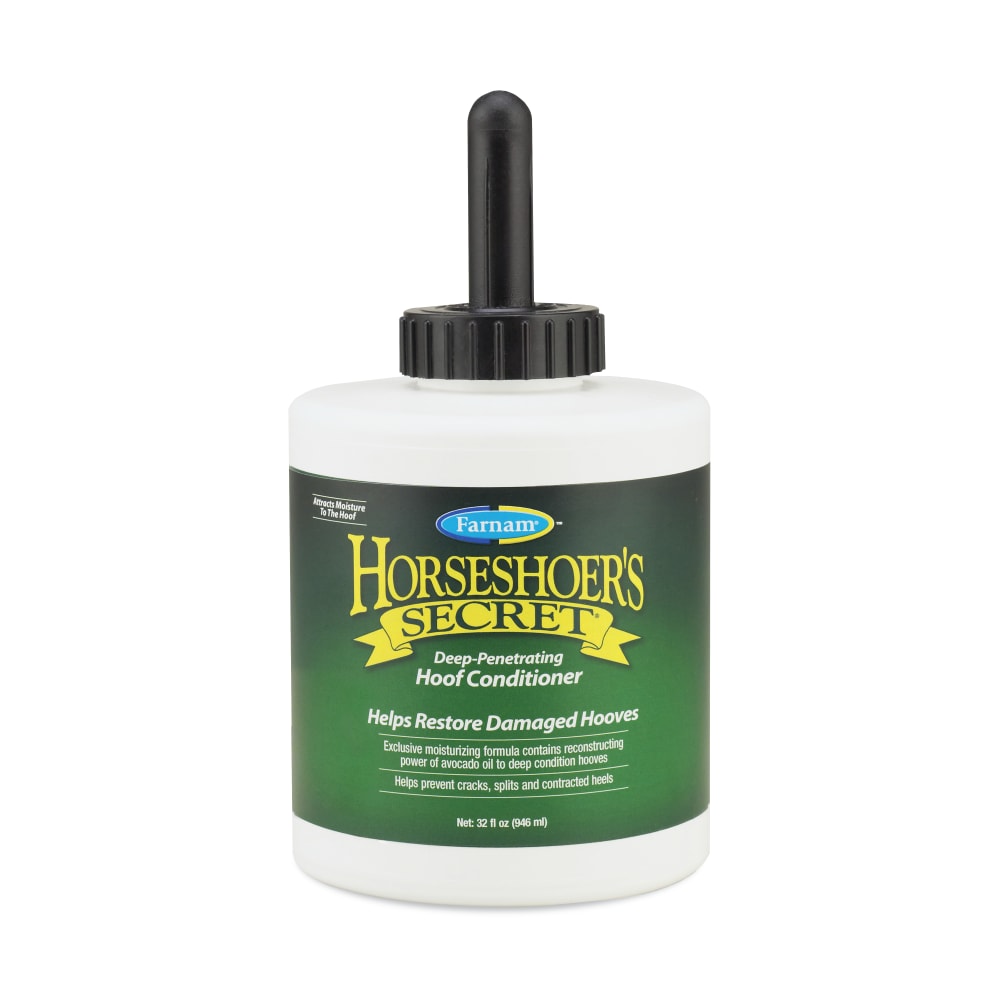
Wet, muddy turnouts soften hooves, which can allow bacteria to invade. Conversely, hot, dry, sandy conditions pull moisture out of the hoof. A moisturizing hoof conditioner, such as Farnam’s Horseshoer’s Secret® Deep-Penetrating Hoof Conditioner, can help to attract moisture to the hooves and prevent cracks, splits and contracted heels.
Conditions in the stall are just as important! You want to cast a critical eye on the bedding in your horse’s stall.
“Shavings are the main bedding used in the U.S. but they need to be clean and dry,” says Curl. “If they are stored outside and put in the stall wet, they will pack into the hoof. When you get warm, moist shavings packed tight, this softens the hoof wall and sets up an environment for bacteria to live, almost like a Petri dish. Both the sole and the hoof wall can begin to deteriorate.”
“If your horse is stabled, clean out his feet before putting him in the stall,” he advises. “Pick through the bedding daily and remove all the wet spots.”
Mistake #3: Overlooking Nutrition for Healthy Horse Hooves
Strong, healthy hooves are built from the inside out and start with the overall diet. A balanced diet that provides adequate calories, quality protein, vitamins and minerals creates the nutritional foundation for maintaining hoof strength, quality and integrity.
The hoof wall is primarily made of keratin, a strong structural protein composed of amino acids. Nutrients associated with healthy hoof growth include essential amino acids such as lysine and methionine, along with biotin and trace minerals such as zinc and copper. While biotin is probably the nutrient most commonly associated with equine hoof health, no single ingredient works alone. Overall dietary balance is more important than simply providing higher levels of one nutrient.
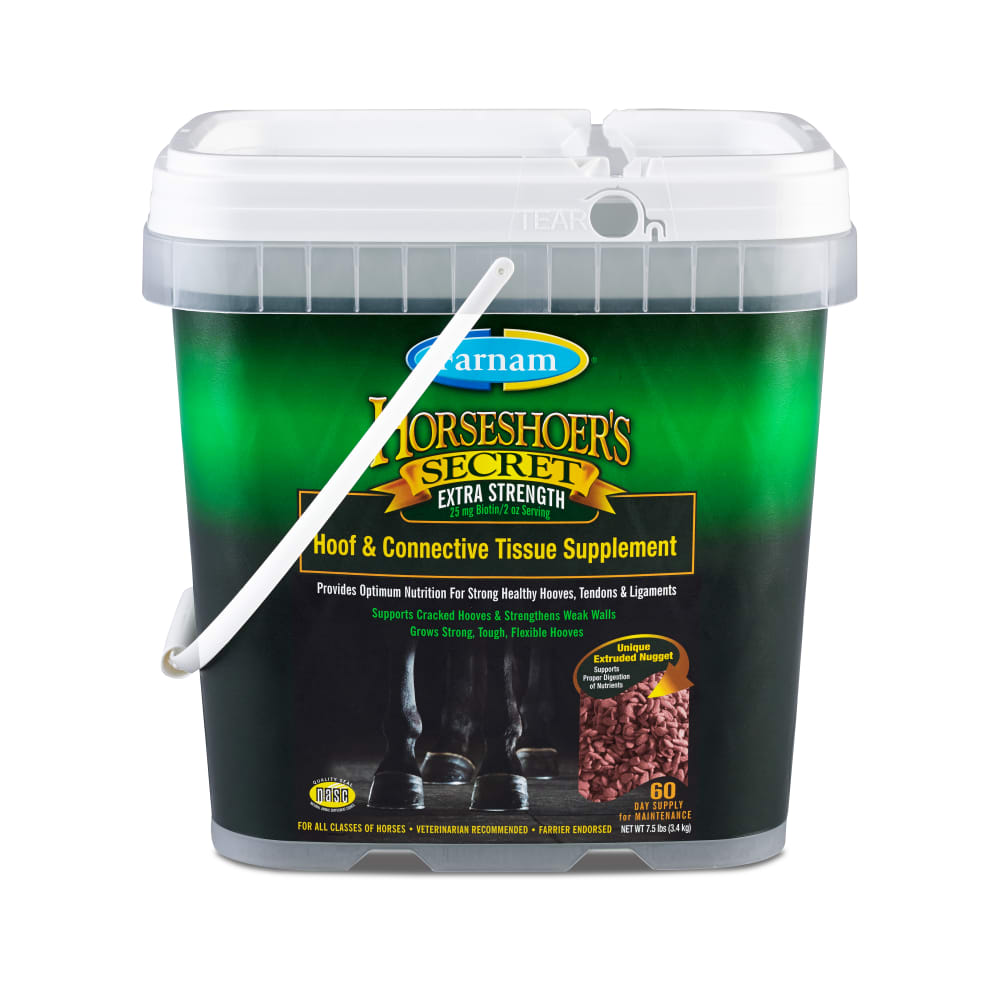
Even with good-quality forage and feed, some horses may benefit from additional nutritional support due to genetics, conformation, environment or workload. A quality hoof supplement, such as Farnam® Horseshoer’s Secret supplements, can provide a consistent combination of nutrients that support healthy hoof growth. Before adding a supplement, consider the horse’s complete diet and select a product that complements what is already being fed.
Remember that nutrition can't change the existing hoof wall; it supports new hoof growth beginning at the coronary band. Because hoof growth takes time, don't expect overnight results. Curl recommends giving nutritional support a chance to work: “For horses that may benefit from a hoof supplement, feed it for at least 60 days before evaluating how well it’s working.”
Frequently Asked Questions
How often should you clean a horse’s hooves?
Ideally, pick and inspect all four hooves daily, as well as before and after riding when appropriate.
How often should a horse see a farrier?
All horses are individuals. Factors such as season, hoof growth, region and how often the horse is ridden can impact how often the horse should see a farrier. Generally, horses need to be trimmed or shod every 5-8 weeks.
Can nutrition impact a horse’s hoof health?
Yes! The hoof horn is largely keratin and adequate protein, amino acids, vitamins and minerals contribute to normal hoof growth and quality.
Does my horse need a hoof supplement?
Horses with poor hoof quality may benefit from a hoof supplement. Adding a consistent combination of ingredients such as biotin, lysine, zinc and copper helps to support hoof growth. Supplements cannot change the hoof wall that is already there but can impact new hoof growth beginning at the coronary band.
Life with Horses Newsletter
Sign up now to stay connected with free helpful horse care tips, product updates, and special offers.
Related Articles
Nutrition and A Horse's Hoof
While most horse owners are not worried about the loss of a kingdom, they do understand the importance of a quality hoof on a horse. A hoof wall has to be structurally sound to hold the nail that holds the shoe. When the hoof wall is compromised, the loss of a shoe is only one consequence. It could also result in the loss of a race, ribbon, trophy or even a day of trail riding...